Progress on US-China Commitments, USCC Publishes Annual Report
This week, the United States and China continued to take action on commitments made during the leaders’ meeting in October.
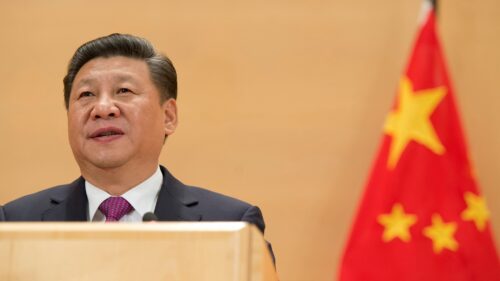
From December 11 to 12, China held its Central Economic Work Conference (CEWC), an annual agenda-setting moment for China’s economic policy for the upcoming year. As in past years, the meeting was chaired by President Xi Jinping.
China has seen several high-level personnel changes at the central and provincial levels over the last few months. Notably, the National People’s Congress Standing Committee (NPCSC) voted to remove Li Shangfu from his position as China’s defense minister.
House and Senate lawmakers unveiled the compromise version of the FY2024 National Defense Authorization Act (NDAA) last week after weeks of negotiations. The NDAA, the annual legislation that authorizes funding the Department of Defense, has become a key yearly vehicle for pushing through China policy priorities, including those not related to defense.
During the final week of November, the US and Chinese governments separately unveiled new iterations of their respective strategies to attract investment and strengthen supply chains. The Biden administration held an inaugural meeting of the White House Council on Supply Chain Resilience, and at the same time, senior Chinese policymakers and domestic and foreign companies gathered in Beijing to attend a five-day supply chain expo and policy forum.
On Saturday, Commerce Secretary Gina Raimondo participated in the Reagan National Defense Forum, where she emphasized the need for the United States to remain the global leader in critical technologies like semiconductors. She urged Congress to increase the budget for the Bureau of Industry and Security (BIS) and make the export control enforcement office “more muscular.”
The last few months have seen multiple developments affecting US companies that operate in the transportation industry. The US Department of Treasury released long-awaited proposed guidance on the clean vehicle provisions of the Inflation Reduction Act.
On Wednesday, lawmakers convened for the first full conference committee to reconcile the House and Senate versions of the FY2024 National Defense Authorization Act (NDAA). The NDAA is one of the last must-pass bills left on the ledger this year, and there is friction between the Senate-approved version that passed with overwhelming bipartisan support in July and the House version, which passed along party lines and includes more politically charged provisions.

In the last year, the Cyberspace Administration of China (CAC) adjusted its rules for cross-border data transfers (CBDT) in what appears to be a slowly loosening government approach to managing data flows. However, given that many fundamental regulations remain in draft form and key terms remain undefined, the change in approach has not yet materialized into lighter compliance burdens for companies.
A four-hour meeting between President Joe Biden and President Xi Jinping on the sidelines of this year’s APEC summit in San Francisco served as a pivotal juncture in thawing relations between the United States and China. The meeting laid the groundwork for expanding communication across multiple levels of government, but it remains to be seen what this will look like in practice and how it will impact US-China commercial relations.
US-China bilateral trade in goods increased 6.8 percent over the previous quarter during Q3 2023, the first quarterly increase since bilateral trade first dived in Q4 2022. Growth in bilateral trade significantly outpaced that of US-worldwide trade, a result of solid consumer spending in the United States and a seasonal increase in US imports of goods ahead of the holiday shopping season that benefits countries that export consumer goods, including China.